Hex Iso Flow
Hex Iso Flow places circular bumps on a true hex lattice in UV space and blends their fields so intersections lift as one smooth surface. Unlike a rectangular grid, neighbors sit at 60° steps, which reads more organic for grips and packaging textures. Circle Size and Smoothing trade isolated domes against merged “cellular” flow.
Preview
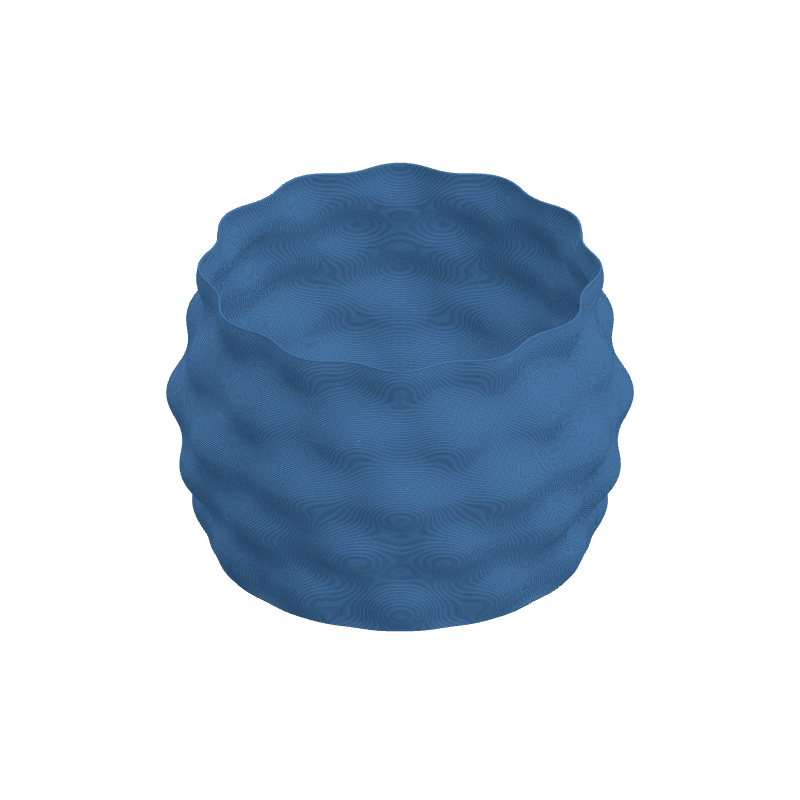
Effect Controls
Interactive preview is available in the interactive reader.
Parameters
Columns (U)- Repeat count around the circumference on the U axis (2–20).
Rows (V)- Repeat count along height on the V axis (1–15).
Depth (mm)- Outward displacement from the combined field (0–10 mm).
Circle Size- Radius of each contributing bump in UV space; larger overlaps more neighbors (0.3–1.5).
Smoothing- Softens the merged iso-surface; higher rounds peaks and fills saddles (0–1).
U Phase- Angular offset of the hex pattern in radians (0–6.28).
V Phase- Vertical offset of the pattern in radians (0–6.28).
How It Works
Each hex cell centers a radial kernel; values are combined (similar to metaballs) and the wall follows a level set of that sum. Columns and Rows set lattice density; Circle Size determines how many neighbors each bump reaches into. Smoothing widens the blend width so triple junctions stay printable instead of pinched spikes.